Orofacial myofunctional therapy. What a fun, sophisticated, multisyllabic phrase, no? Try saying it ten times fast. It almost sounds like some sort of alternative intervention (maybe because of the “function” piece), but the truth is, myofunctional therapy is evidence-based, practical, and just plain makes sense.
What it helps
Myofunctional therapy can be used to treat various oral and facial muscular issues, such as those related to chewing, speech, tongue positioning, lip strength, and breathing. Many people go for myofunctional therapy to help with breathing issues while sleeping, such as sleep apnea. Some people go for challenges involving tongue thrust, drooling, or chewing trouble. If you notice that your child is challenged in any of these areas, and traditional speech therapy doesn’t seem to be helping after some time, you might want to consider going for myofunctional therapy. Call Ezreinu at 718-750-1010 for a myofunctional therapist referral.
How it works
During therapy sessions, clients generally have to do muscular exercises with their tongue, lips, or face according to the therapist’s instructions. For some issues, the exercises might include some more fun (and somewhat comical) ones such as singing or blowing musical instruments. Because the therapy is based primarily on following instructions, the patient has to be at least at the developmental level of a typically developing 4-year-old. Children who are unable to follow directions such as “stick your tongue out”, “breathe in through your nose”, or “blow up this balloon” are probably not candidates for myofunctional therapy.
Who does it
Myofunctional therapists are often speech therapists who went for extra trainings and certifications in myofunctional therapy, though OTs, PTs, and dental hygienists are all qualified to be trained in it as well. Depending on which issue the therapist is treating, they usually work together with specially trained dentists, orthodontists, oral surgeons, ENTs, or sleep specialists. If you’ve wondered at the term “myofunctional dentist”, it’s actually a misnomer; only therapists or dental hygienists actually do myofunctional therapy. However, they often work together with “airway dentists”, who specialize in breathing, tongue, and palate complications. Myofunctional therapy is a wonderful supplementary treatment, but for issues like mouth breathing, it’s rarely the full solution.
Tools and toys
Many children with special needs struggle with oral motor problems such as drooling, improper chewing, or open mouths. While these concerns should be addressed by a speech therapist or OT, there are some techniques you can implement at home to improve oral awareness and control. A lot of kids enjoy using chewies or vibrating toys to enhance oral stimulation. Here some popular options:
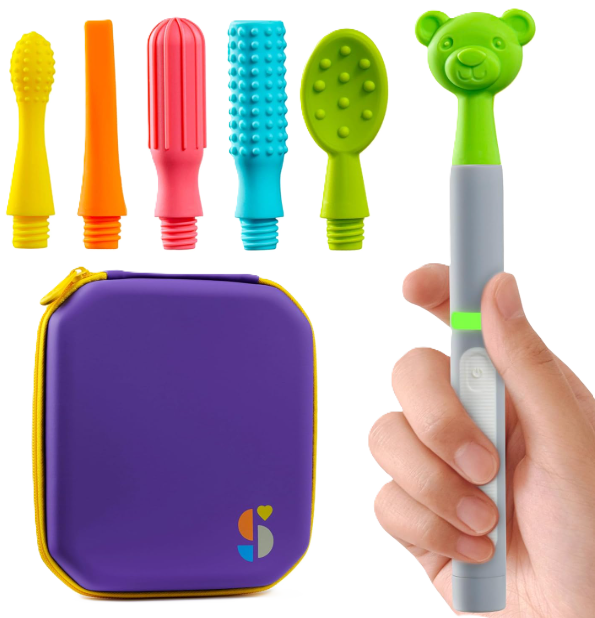
With various exchangeable, brightly colored toppers in different cute shapes, the Buzz Buddy vibrating tool is versatile and fun to use. Available on Amazon.
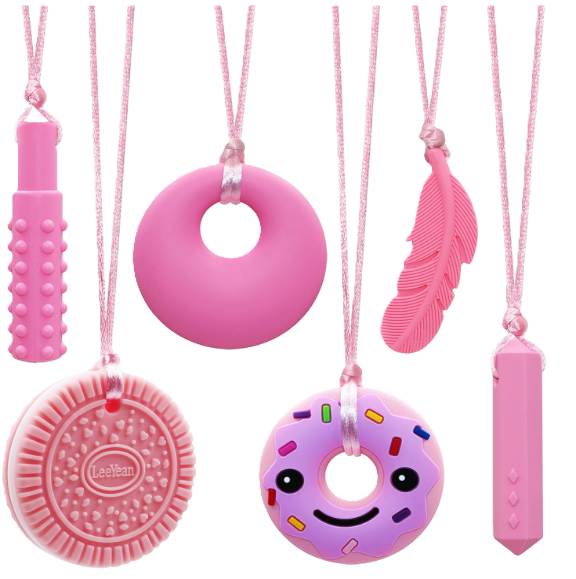
These chewy necklaces are a great way to give your child some oral input. They also serve as a useful alternative for kids who like to chew hands, clothes, or other people:) Keep redirecting chewing behaviors to the necklace. Available on Amazon.
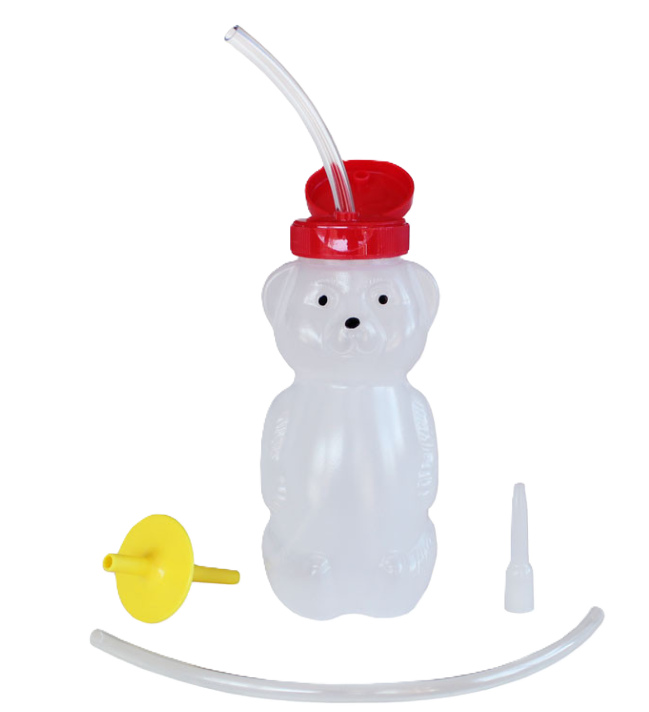
This cute, squeezy bear bottle helps train children how to drink properly from a straw, by using a valve which stops the liquid from flowing back down after it’s been sucked up. Available on arktherapeutic.com (or for a few more dollars on Amazon).
Many additional therapeutic tools for enhancing oral motor skills are available on arktherapeutic.com.
With much appreciation to Leah Backenroth, SLP for sharing her knowledge with us for this newsletter. Leah is a certified myofunctional therapist in Wesley Hills, NY. She can be reached at 347-446-1892.
The Shmuelowitz family had just married off a child, and while they normally loved to have Bluma — their adorable daughter with special needs — at home, having the fun-loving and somewhat rambunctious nine-year-old around during the week of sheva brachos was proving to be very challenging. Mrs. Shmuelowitz called Ezreinu and was sent a patient, experienced volunteer to take Bluma out one afternoon so that the whole family could relax and regain their energy.
Yanky’s father had heard that a new special ed school was opening in his neighborhood, and he wanted to find out whether it might be a fit for his son. He didn’t feel comfortable telling acquaintances that he was considering a special ed placement for Yanky, so he didn’t know where to turn for information about the program. He called Ezreinu and was happy to hear that not only had they heard of the new school, but they had all of the details he needed to hear about them in order to make an informed decision.
Identifying details have been changed to protect client confidentiality.
Liked this post?
Sign up to receive bi-weekly updates to your inbox.