Pesach is coming!!!!!!!!! Aren’t you excited? Come on, aren’t you? No?
Pesach is a special yom tov.
And also, it’s hard. And that’s okay.
Whether you’ve arranged for your child to go away for Pesach and you feel like there’s a hole at the seder table where that child should be (and if you just feel relieved, yes, you are normal — don’t give the guilt an inch), or if you’re looking at a week of having your child at home and bouncing off the walls, Pesach is a LOT, both practically and emotionally.
After all of the scrubbing, shopping, and cooking, everyone wants to have a meaningful Pesach, including us families of children with special needs (no matter how tired we are). We’ve included some practical ideas below so that you and your family can make the most of your yom tov despite the challenges.
Seder Hacks
The Pesach seder.
The night for questions, the night for children.
For all children, of all abilities.
If you’ve chosen to put your child with special needs to bed before the fun begins, that is perfectly understandable. But if you’ve determined that your child can handle it and are planning to keep them up (kol hakavod!), you probably want to make a game plan so that your child can gain from the experience, rather than simply pushing through it.
Go through the seder mentally and make a note of any parts that might be more difficult for your child (not getting into other people’s space, waiting so long to eat, etc.) and plan appropriate modifications, either on your own or together with your child (getting their own ke’arah, matzos, and haggadah so as not to be tempted to touch other’s; going into the kitchen for a snack during maggid, etc.).
"How many more pages until maggid is over?"
Be it a child asking this question aloud or an adult secretly thumbing through the haggadah to see how much is left, the seder can get very, very long for anyone.
Ninety-nine percent of the difficulty in waiting is the uncertainty factor. Some practical ideas to make the time go faster for your child:
Insert bookmarks in your child’s haggadah at the end of the long parts of the seder, such as Maggid and Hallel, so they can anticipate how much is left.
Buy a new toy that you think your child will enjoy and save it for Maggid. After the mah nishtana and songs that follow, bring out the toy so that your child can be kept busy while the adults and bigger kids say the haggadah.
There are many natural opportunities sprinkled throughout the seder for your child to get up from their seat and move around. Involve your child with serving, clearing, giving out portions of matzah and marror, removing empty bottles from the table, and so forth.
Clean your child’s favorite fidgets and squishies (or buy new ones!) so that they can be played with during the more, well, boring parts of the seder.
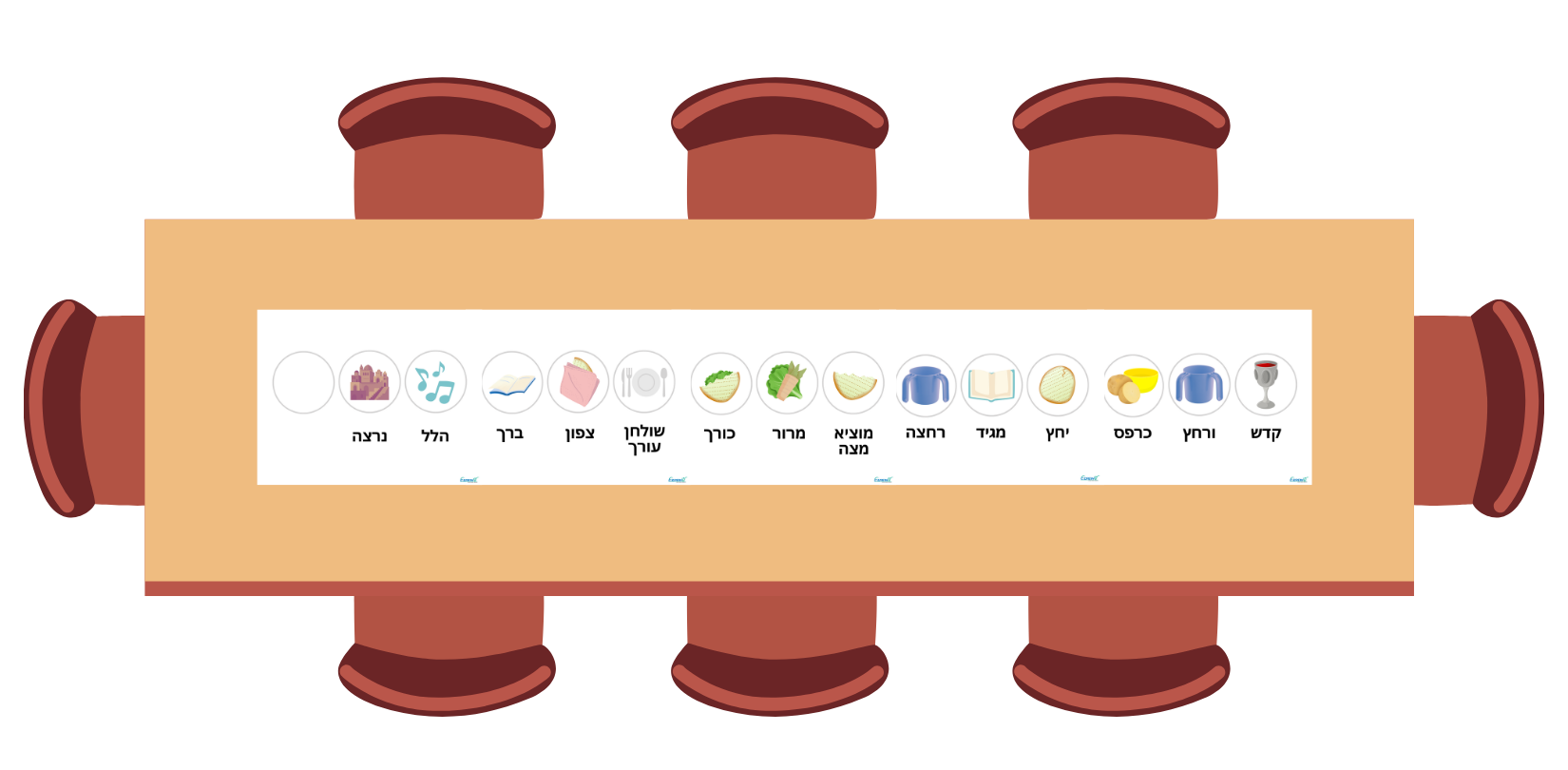
Use this adorable Visual Seder Strip that we put together for you! Have your child line up the Seder strip in a row on the floor and place a plastic cup on Kadeish, Urchatz, and so forth as the family finishes each part. Alternatively, line up the pages down the middle of your table. Place the pages beneath a plastic tablecloth so that you can see the Strip while keeping it safe from wine spills!
When it comes to a change in routine, knowing what to expect is key. Click the button below to download a cute, colorful social story to help prepare your child for the yom tov of Pesach!
Last year, we sent out a pre-Pesach newsletter with some simple and practical tips and reminders to help you and your family enjoy a calm Pesach. Click the button below to view. Enjoy!